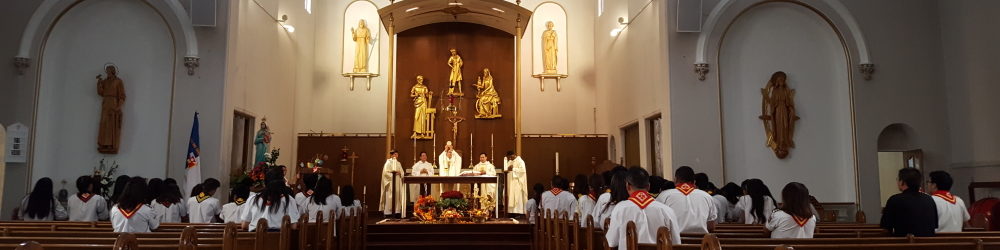

Presiding at the First Vespers of the Solemnity of Mary, Mother of God, coinciding with the final hours of 2025 and the conclusion of the Jubilee Year, Pope Leo reflected on the mystery of divine motherhood, the meaning of time fulfilled in Christ, and the quiet but decisive role of hope entrusted to the humble.
Celebrated at St. Peter’s Basilica at 5 p.m. Rome time, the liturgy, the Pope said, possesses a “singular richness,” drawing together the mystery of Christmas and the threshold of a new year under God’s blessing.
The antiphons and the Magnificat, he noted, proclaim “the paradoxical event of a God born of a virgin, or, conversely, the divine motherhood of Mary,” while the solemnity itself “covers the transition from one year to the next and extends over it the blessing of Him ‘who was, and is, and is to come’ (Rev 1:8).”
This year’s celebration, Pope Leo added, unfolded “at the end of the Jubilee, in the heart of Rome, near the Tomb of Peter,” giving particular resonance to the Te Deum (the traditional Catholic prayer of Thanksgiving) that followed. It was meant, he said, to “expand to give voice to all the hearts and faces that have passed under these vaults and through the streets of this city.”
Turning to the biblical reading from St. Paul’s Letter to the Galatians, the Pope highlighted what he called “one of the astonishing summaries of the Apostle Paul”: “When the fullness of time had come, God sent his Son, born of a woman, born under the law, to redeem those who were under the law, so that we might receive adoption as sons” (Gal 4:4–5).
This expression, he explained, reveals a divine design at work in history.
“This way of presenting the mystery of Christ suggests a plan, a great plan for human history,” he said, describing it as “a mysterious plan, but with a clear center, like a high mountain illuminated by the sun in the middle of a dense forest: this center is the ‘fullness of time.’”
That same notion of a divine plan, he continued, “is echoed in the canticle of the Letter to the Ephesians,” which speaks of “the plan to bring all things together in Christ, things in heaven and things on earth… to be carried out in the fullness of time” (Eph 1:9–10).
Against this horizon, Pope Leo addressed the anxieties of the present age.
“Sisters and brothers, in our time we feel the need for a wise, benevolent, and merciful plan,” he said, invoking a vision that is “free and liberating, peaceful and faithful,” like the one proclaimed by Mary in her Magnificat: “His mercy extends to those who fear him, from generation to generation” (Lk 1:50).
By contrast, the Pope warned, other designs continue to dominate the world. He described them as “strategies aimed at conquering markets, territories, and spheres of influence,” including “armed strategies, cloaked in hypocritical rhetoric, ideological pronouncements, and false religious motives.”
Mary, he said, sees reality differently.
“The Holy Mother of God, the smallest and the highest among creatures, sees things with God’s gaze,” recognizing how the Lord “scatters the schemes of the proud, overthrows the powerful from their thrones and exalts the humble, fills the hands of the hungry with good things and empties those of the rich” (cf. Lk 1:51–53).
Reflecting on the Annunciation, Pope Leo emphasized that God’s plan unfolded not through imposition but through consent.
“The Mother of Jesus is the woman with whom God, in the fullness of time, wrote the Word that reveals the mystery,” he said. “He did not impose it: He first proposed it to her heart and, having received her ‘yes,’ He wrote it with ineffable love in her flesh.”
In that moment, he added, “God’s hope was intertwined with the hope of Mary,” a daughter of Abraham, “according to the flesh and, above all, according to faith.” This pattern continues in history, the Pope said, because “God loves to hope with the hearts of the little ones, and He does so by involving them in His plan of salvation.”
“The more beautiful the plan, the greater the hope,” he continued, noting that the world advances “driven by the hope of so many simple people, unknown but not to God,” who trust in a future “because they know that the future is in the hands of Him who offers them the greatest hope.”
Among these witnesses of hope, Pope Leo pointed to Simon Peter, the first pope.
“One of these people was Simon, a fisherman from Galilee,” he said, recalling how God entrusted him with a faith so sincere that “the Lord was able to build His community upon it” (cf. Mt 16:18). That faith, he noted, continues to draw the faithful to Peter’s tomb, “where pilgrims from all over the world come to renew their faith in Jesus Christ, the Son of God,” particularly during the Jubilee now coming to a close.
“The Jubilee is a great sign of a new world, renewed and reconciled according to God’s plan,” the Pope said, explaining that Rome holds a unique place in this design; not because of power or prestige, “but because here Peter and Paul and so many other martyrs shed their blood for Christ.”
Concluding his homily, the Pope invited thanksgiving for the Jubilee and for all who served pilgrims throughout the year. “Let us thank God for the gift of the Jubilee, which has been a great sign of his plan of hope for humanity and the world,” he said, recalling that this hope had been “the hope of our beloved Pope Francis a year ago.”
“I would like it to remain so, and even more so after this time of grace,” Pope Leo concluded. “May this city, animated by Christian hope, be at the service of God’s plan of love for the human family. May the intercession of the Holy Mother of God, Salus Populi Romani (Salvation of the People of Rome,) obtain this for us.”
After the celebration of Vespers, Pope Leo proceeded to St. Peter’s Square, where he paused in prayer before the Nativity scene and then greeted the faithful and pilgrims gathered in the square.

The post Pope Leo at year’s end: God’s plan of hope is written in the hearts of the humble appeared first on CatholicVote org.