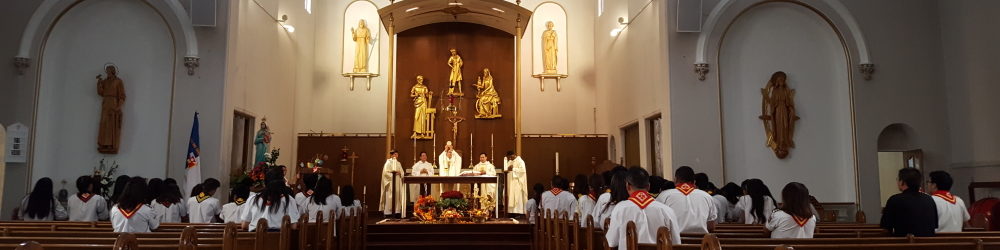

A debate that was sparked last year by a Missouri archbishop has recently gained renewed attention after the prelate offered new remarks about his decision to ban Mass hymns that could communicate poor theology — and the edict’s quick reversal.
In October 2024, Archbishop Shawn McKnight of Jefferson City, Missouri, banned 12 hymns judged “to be insufficient in sound doctrine,” according to an Oct. 19 report in The Catholic Telegraph. Banned hymns included “All Are Welcome” by Marty Haugen, “God Has Chosen Me” by Bernadette Farrell, “Led By the Spirit” by Bob Hurd, and “Table of Plenty” by Dan Schutte.
Just days after the initial ban, Archbishop McKnight reversed the decision following outcry from the laity. He said that, in future, there will be “more comprehensive consultation with the relevant parties within the diocese” before any further bans. He also said that such a process will be “synodal,” according to the Catholic News Agency.
The original ban was the fruit of years of research by Father Daniel Merz, chairman of the diocesan liturgical commission, who consulted extensively with priests in the diocese.
Archbishop McKnight told EWTN in an interview this month that he hopes people learn from what he described as a “mistake.”
He later added, “Hymns that are liked by the people are a good choice, but it’s also important that they convey the Catholic faith.”
“It’s about discernment of the will of God and what the Holy Spirit wants,” he said.
Since the initial ban and reversal, the archdiocese has issued guidelines to help parishes choose appropriate music for worship.
The guidelines are informed by a document from the United States Conference of Catholic Bishops (USCCB) that aims to help parishes make judgments about liturgical music. Titled “Catholic Hymnody at the Service of the Church: An Aid for Evaluating Hymn Lyrics,” the document proposes two questions that must be asked when judging whether a hymn is appropriate for use in the liturgy:
“Is the hymn in conformity with Catholic doctrine?” and “Is the hymn expressed in image and vocabulary appropriately reflective of the usage of Scripture and the public liturgical prayer of the Church?”
In order to judge conformity with doctrine, the USCCB encourages those entrusted with selecting liturgical music to use the Catechism of the Catholic Church, which it says is the best resource for understanding Catholic doctrine.
The document also warns against hymns that emphasize one aspect of the liturgy or the faith at the expense of others.
“Different hymns may legitimately express or reflect different aspects of one doctrine, but if all of the hymns relevant to a particular doctrine express only one dimension of the doctrine to the exclusion of others, then the catechesis offered by the hymnody would, as a whole, not be in conformity with Catholic doctrine,” it says.
One example it gives is a Communion hymn that emphasizes the Eucharist as fellowship but excludes the Eucharist as a sacrifice or fails to communicate the Real Presence of Christ in the Eucharist.
>> Vatican recognizes Eucharistic miracle in India after decade of investigation <<

The post Missouri archbishop weighs in on debate of banning problematic hymns from Mass appeared first on CatholicVote org.