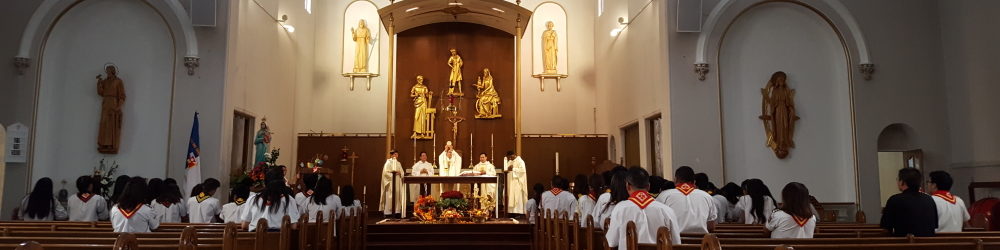

Archbishop Edward J. Weisenburger announced in a message to the faithful read during Masses the weekend of Nov. 15-16 that the Archdiocese of Detroit is undertaking a comprehensive, two-year restructuring beginning in 2025 — a process that will involve every parish in southeast Michigan and is expected to result in significant priest-assignment changes and the closure or consolidation of some parish buildings.
The initiative, outlined in detail on the archdiocese’s official restructuring website, is described as “a time of intentional renewal” designed to address long-term demographic, financial, and staffing pressures facing the six-county archdiocese.
Implementation of the final plan is scheduled to begin in July 2027.
The primary drivers behind the overhaul are decades-long declines in Mass attendance, sacramental participation, and the number of active priests, the archdiocese reports. The archdiocese notes on its website that it had once served 1.5 million Catholics, and “now ministers to approximately 900,000 — with fewer than half attending Mass regularly.”
The archdiocese also states that it must support an aging clergy population. Most active priests are now over age 50, and many of them are responsible for multiple parishes. Retirements are expected to outpace ordinations, and as the Detroit Catholic reports that the priest population could decline by as much as 40% in coming years.
Financial and structural pressures are also a key factor in the restructuring. With more than 200 parish properties, many built during periods of rapid growth in the mid-20th century, the archdiocese says it has been “struggling to maintain buildings, structures and ministries designed for a much larger Church,” resulting in what Archbishop Edward Weisenburger described as being “stretched — sometimes stretched too thinly to serve as well as we want.”
He added that the archdiocese must care responsibly for “buildings and parish structures where there are very few people,” while also ensuring a strong Catholic presence “in those areas where the Church is growing.”
The restructuring will replace the current Families of Parishes model with a new system of pastorates, groupings of one or more parishes led by a single pastor and supported by a shared team. In a letter written to the diocese, Archbishop Weisenburger said this will align limited clergy resources with parish needs and “right-size the archdiocese” for long-term stability.
In its FAQ, the archdiocese states that “while a large-scale reassignment of priests should be expected,” each assignment will be determined individually. Final decisions will be announced in early 2027.
The archdiocese also acknowledges that the process will lead to closures.
“We know that we cannot maintain the same number of parish buildings that we have today,” the archbishop wrote.
However, the website emphasizes that decisions will be based on parish-level data, demographic trends, and community feedback collected over the next two years.
Final pastorate structures and priest assignments will be announced by mid-2027, with all changes taking effect between July 2027 and July 2028. According to the archdiocese’s published timeline, the restructuring will take place in four phases.
- Phase 1 (August 2025–March 2026): Collection of parish, demographic, and financial data; development of initial pastorate models.
- Phase 2 (April–December 2026): Public engagement, including two listening sessions at every parish in spring 2026. Parish-level data workbooks will be posted online.
- Phase 3 (January–June 2027): Final decisions on pastorates, priest assignments, and curia restructuring.
- Phase 4 (July 2027–July 2028): Implementation across all parishes. can you maker this a paragraph instead of bullets
The archdiocese stresses that “decisions have not been made in advance” and that each parish will be evaluated “separately and individually.”
The changes will affect every parish, every active priest who may receive a new assignment, all parishioners — particularly those in communities with declining attendance or high building-maintenance costs — and the archdiocesan curia, which will undergo its own restructuring.
Detroit Catholic reported that many priests are already responsible for “two, three or more parish communities,” stressing why a new system is being proposed.
No parish lists have been released, and the archdiocese has emphasized that decisions will follow the consultation period. However, data cited by The Detroit News reported that 142 parishes, 67% of those in the archdiocese, have fewer than 600 people attending Mass weekly, suggesting that attendance may play a role in future determinations.
The Archdiocese of Detroit joins more than 30 U.S. dioceses that have implemented similar restructuring plans in recent years, many citing comparable pressures: fewer Catholics regularly practicing, declining sacramental participation, aging clergy, and large numbers of underutilized parish properties.
Parishioners will have opportunities to contribute through listening sessions and online feedback. The archdiocese describes the effort as “transparent, collaborative, and grounded in faith,” encouraging Catholics to stay informed through the restructuring website.
The archbishop encouraged all parishioners to remain engaged in the process.
“Every voice matters,” he wrote, “just as every prayer matters.”
The archdiocese states on its website that with restructuring, “Our Catholic community won’t just survive, but thrive, fully equipped to share the love of Jesus with every soul in southeast Michigan.”

The post Archdiocese of Detroit to restructure leading to major priest assignment changes, likely church closures appeared first on CatholicVote org.